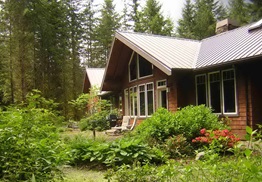
 Even in temperate western Washington it can take only a few sunny days for forests to dry out enough to catch fire. And, in windy conditions wildfires can get out of control quickly. Wildfires burn every year in east King County. Before wildfire strikes, homeowners can help protect lives and property by creating a fire-adapted space around structures.
Top 8 tips for maintaining a wildfire safety zone in the 30 feet around your home
- Remove all dead plant material from around your home. Rake up dry leaves (under decks and porches too!) and move firewood away from the house. Keep your roof and gutters clear of flammable debris.
- Place a 3 to 5-foot swath of gravel or stones around the foundation of your home instead of flammable mulch.
- Prune branches that overhang or touch the house.
- Take out "ladder fuels," vegetation between grass and treetops that can carry fire between foliage and structures.
- Keep blowing embers out of your house. Cover exterior vents with fine (1/8-inch) mesh.
- Store flammable materials, including cushions, indoors instead of on porches and decks.
- Use fire-resistant construction materials such as Class-A asphalt shingles, metal or concrete products for your roof.
- Use fire-resistant plants in the garden. Read our list of fire-resistant plants for the Puget Sound Basin (PDF), or search our illustrated online Native Plant Guide for fire-resistant plants.
- Copied from
https://kingcounty.gov/services/environment/water-and-land/forestry/forestfire.aspx
– which has MORE details and information.
Read More
 Workers at the University of Washington’s Seismology Lab have concern that the 7.7 magnitude earthquake that occurred on the British Columbia coast over the weekend may pretend future seismic activity in Washington.